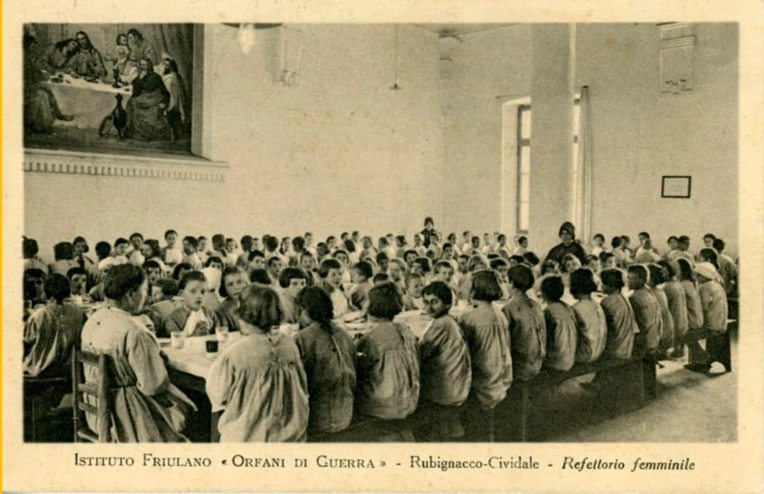
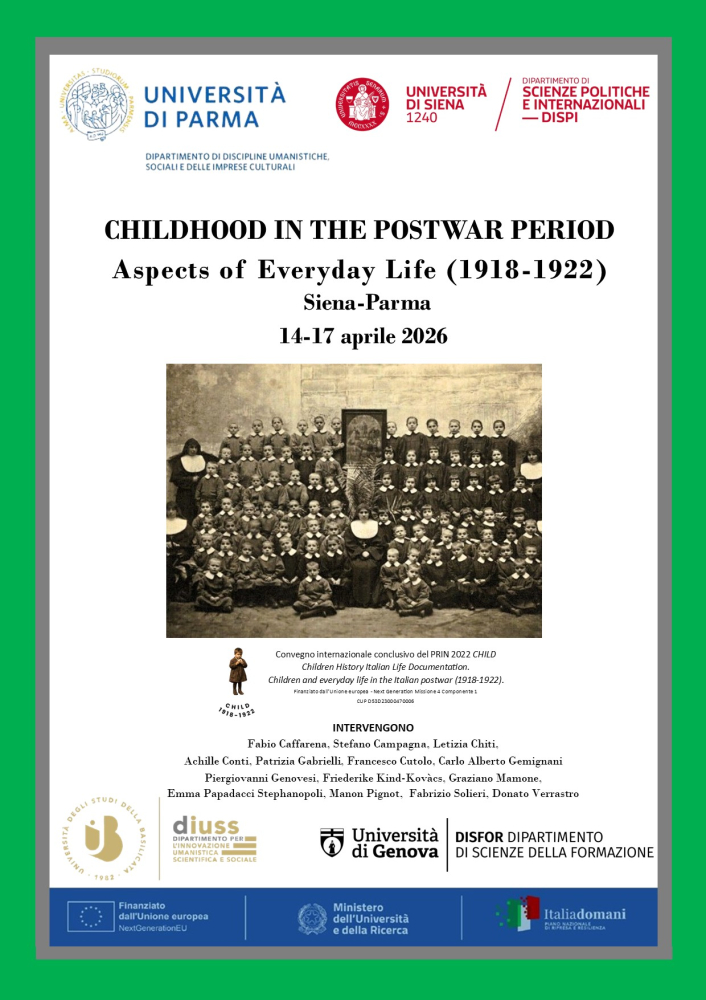
The research project CHILD – Children and Everyday Life in Postwar Italy examines the condition of childhood in the immediate aftermath of the First World War, with particular attention to situations of marginality and emergency, including orphans, refugees, and children classified at the time as “abnormal” or affected by alcoholism. The period under consideration spans the four years from 1918 to 1922, situated between the end of the Great War and the rise of Fascism. During these years, an increasingly pronounced focus on the childcare and welfare system emerged, with initiatives that soon became firmly embedded within frameworks characterized by strong nationalist overtones. These interventions were aimed not only at assisting, protecting, treating, and educating children, but also at disciplining, regulating, and directing them.